
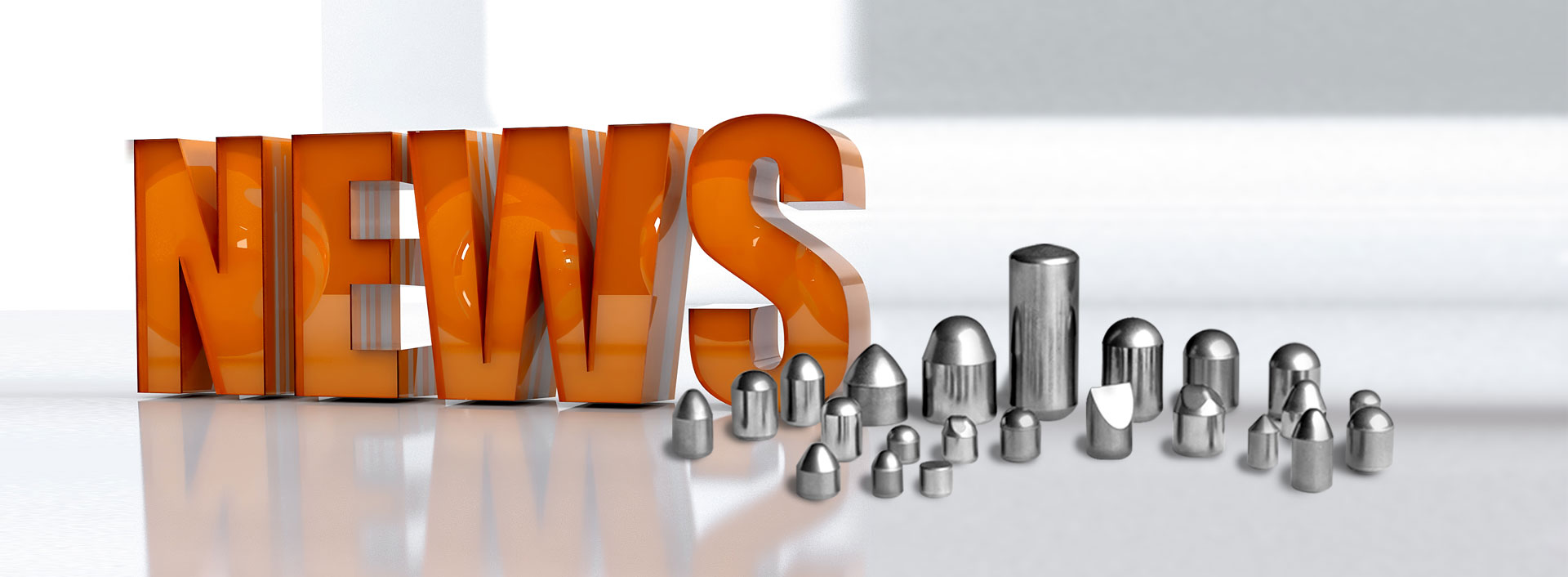

The Core Logic Behind Button Shape Selection
The geometry of a tungsten carbide button is not a cosmetic variation—it is an engineering solution matched to specific rock conditions and drill bit designs. Button shape directly determines contact area with rock, stress distribution, and rock-breaking efficiency. The smaller the contact area, the higher the unit pressure, and the easier it is to fracture hard rock. However, an excessively small contact area accelerates wear and increases the risk of button fracture.
The primary selection criterion is rock hardness and abrasiveness: hard, dense rock requires high contact pressure to initiate cracks, while soft to medium-hard rock benefits from more efficient cutting and chip removal. At the same time, the drill bit type—roller cone, DTH, or top hammer—determines button installation and the mode of force transfer.
Main Button Shapes, Drill Bits, and Applications
Spherical Buttons (Dome)
Spherical buttons feature a fully domed head with a small contact point that generates high pressure under load. They are suited to drilling hard, dense rock such as quartzite, basalt, and granite. With sufficient impact energy, spherical buttons deliver high energy utilization and effective rock breakage.
Typical drill bits: DTH bit gauge buttons, roller cone bits, impact rock drills
Rock formations: Hard to very hard formations, moderate to severe abrasiveness
Conical Buttons
Conical buttons have a tapered head with an even smaller contact area than spherical buttons, enabling faster penetration rates but with lower wear resistance. The conical profile provides a guiding effect that reduces hole deviation and improves drilling straightness. Conical buttons are suitable for medium-hard rock formations because their more pointed profile is more prone to breakage in extremely hard conditions.
Typical drill bits: Roller cone bits, DTH bits, impact drilling tools
Rock formations: Medium-hard formations, non-abrasive or mildly abrasive ground
Parabolic (Ballistic) Buttons
Parabolic buttons, also called semi-ballistic or ballistic buttons, fall between spherical and conical profiles in performance. They offer a balance of penetration rate and wear resistance. Ballistic buttons are commonly used as front buttons of DTH bits, suitable for medium abrasive and medium-hard formations, and can also serve as gauge buttons in soft rock.
Typical drill bits: DTH bits, roller cone bits
Rock formations: Medium-hard formations, mildly abrasive ground
Wedge Buttons
Wedge buttons provide a more aggressive cutting action, suitable for rapid rock breakage but with higher fracture risk than other shapes. They are primarily used for cone drills and impact drills, drilling in soft and medium-hard rock. Their aggressive profile makes them effective in high-penetration-rate conditions where fracture probability is low.
Typical drill bits: Roller cone bits, impact drilling tools, specialized DTH bits
Rock formations: Soft to medium-hard formations, high penetration rate with low fracture risk
Spoon (Scoop) Buttons
Spoon buttons break rock through a cutting action, featuring a larger contact area and optimized chip removal. They are made for roller cone bits, suitable for high-speed drilling of soft rock.
Typical drill bits: Roller cone bits
Rock formations: Soft rock formations, high-speed drilling conditions
Flat Top Buttons
Flat top buttons provide a stable contact surface and broader wear area. They are mainly used for oil field roller cone bit gauge teeth and retaining diameter teeth, offering excellent wear resistance and impact toughness. Their primary function is to maintain bit diameter and slow geometric loss rather than serve as the main rock-breaking element.
Typical drill bits: Roller cone bit gauge protection, diamond bits, hole stabilizers
Rock formations: All formations for gauge protection, where wear resistance is the primary requirement
Quick Reference Table
| Shape | Primary Drill Bit Type | Suitable Rock Formation | Core Function |
|---|---|---|---|
| Spherical | DTH bits, roller cone bits | Hard, dense formations | High contact pressure, hard rock breakage |
| Conical | Roller cone bits, impact tools | Medium-hard formations | Higher penetration rate, deviation control |
| Parabolic | DTH bits, roller cone bits | Medium-hard formations | Balance of speed and wear resistance |
| Wedge | Roller cone bits, impact tools | Soft to medium-hard formations | Aggressive cutting, fast rock breakage |
| Spoon | Roller cone bits | Soft rock | High-speed drilling, optimized chip removal |
| Flat Top | Roller cone bit gauge, diamond bits | All formations | Diameter maintenance, wear protection |
Conclusion
Selecting the right tungsten carbide button shape requires consideration of drill bit type, rock hardness and abrasiveness, and drilling method. There is no universal shape—only the right match for a specific application. Correctly matching button geometry to working conditions significantly improves penetration rates, extends bit life, and reduces overall drilling costs.


